

Quick Summary: Most outreach fails at the prospect qualification stage, not in the email, because a bad list poisons everything downstream. Deciding whether a site is worth outreach depends on real signals like website type, topical relevance, organic traffic quality, geography, anchor and indexation patterns, and outbound link behavior, not a headline DR score. That is why strong operations reject many high DR sites and accept some lower DR ones, and why disciplined list cleaning beats sending more emails.
In this article
- Why qualification matters more than volume
- The first filter: website type
- Topical relevance, misunderstood
- Organic traffic quality vs. size
- Geography mismatch
- Why we reject high DR sites
- Why lower DR sites sometimes win
- Anchor spam patterns
- Content quality signals
- Indexation patterns
- Outbound link behavior
- Cleaning lists as a discipline
- The biggest mistake in outreach
- Key takeaways
- Frequently asked questions
Most outreach campaigns fail before the first email is sent.
Not because the outreach specialist wrote a weak pitch. Not because the publisher ignored the email. And usually not because the niche is “too competitive.”
The failure starts much earlier, at the prospect qualification stage.
A bad prospect list poisons everything downstream:
- reply rates collapse,
- budgets get wasted on irrelevant placements,
- outreach teams spend hours contacting sites that should have been filtered out in minutes,
- and clients end up paying for metrics instead of actual visibility.
This is one of the biggest misconceptions in outreach. People think outreach is primarily an email problem. At scale, it is mostly a filtering problem.
Most outreach waste comes from bad prospect selection, not bad email copy.
The difference between mediocre campaigns and strong editorial outreach operations is usually not volume. It is qualification accuracy.
Why Prospect Qualification Matters More Than Outreach Volume
A lot of outreach campaigns operate on inflated prospect counts. Huge exports from Ahrefs or Google searches get dumped into spreadsheets, and outreach begins almost immediately.
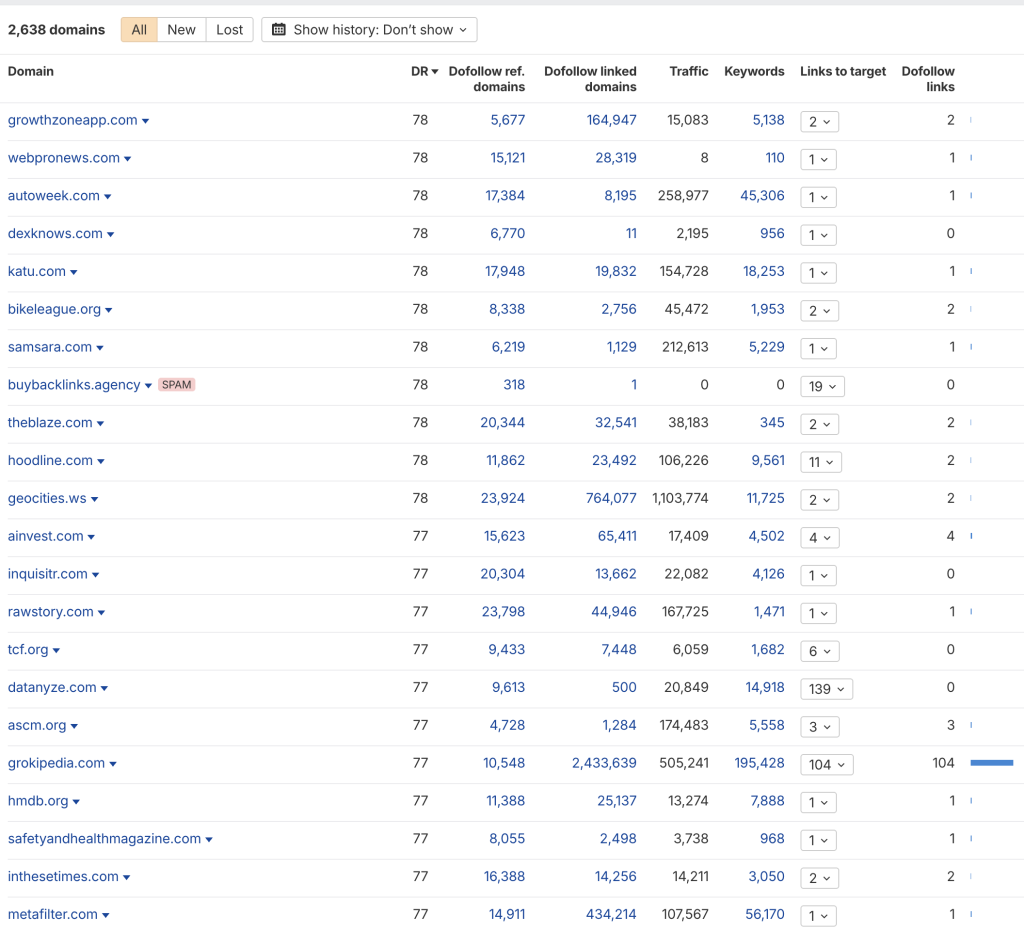
That approach breaks fast.
Large raw lists contain:
- ecommerce stores,
- local business sites,
- abandoned blogs,
- fake media publications,
- AI-generated content farms,
- recycled guest post networks,
- agency-owned PBN-style assets,
- domains with manipulated authority metrics,
- and sites with no meaningful audience.
The problem is that many of them still look “good” on the surface.
- Some have DR60+.
- Some show good traffic numbers.
- Some even appear in search results consistently.
But outreach qualification is not about finding domains that can publish content. It is about finding publications that make contextual editorial sense for the campaign.
That distinction matters more than most people realize.
A placement on a lower-authority but highly relevant publication with real readership is often more valuable than a DR70 site built entirely around selling guest posts.
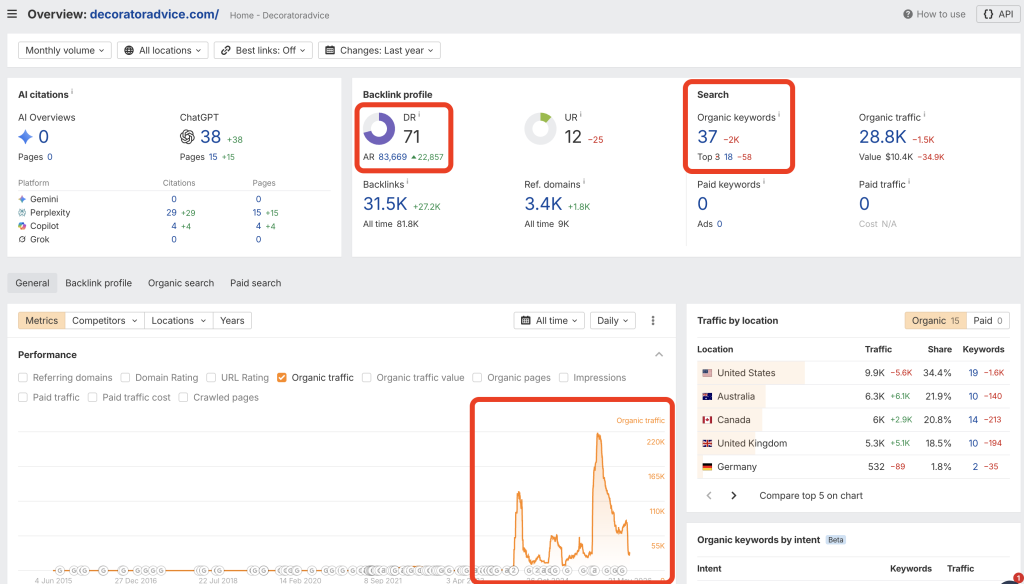
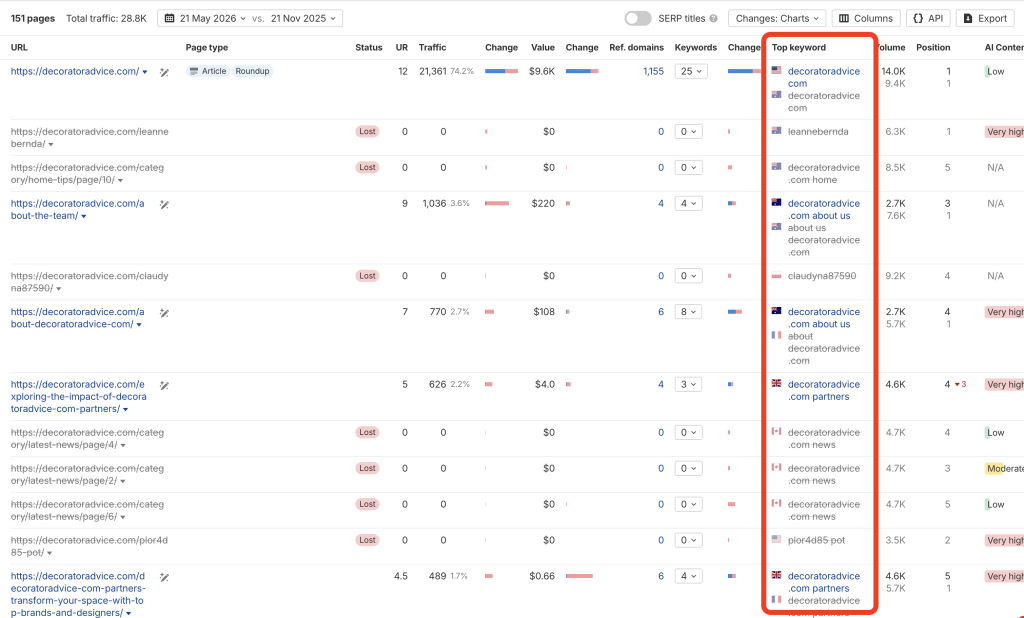
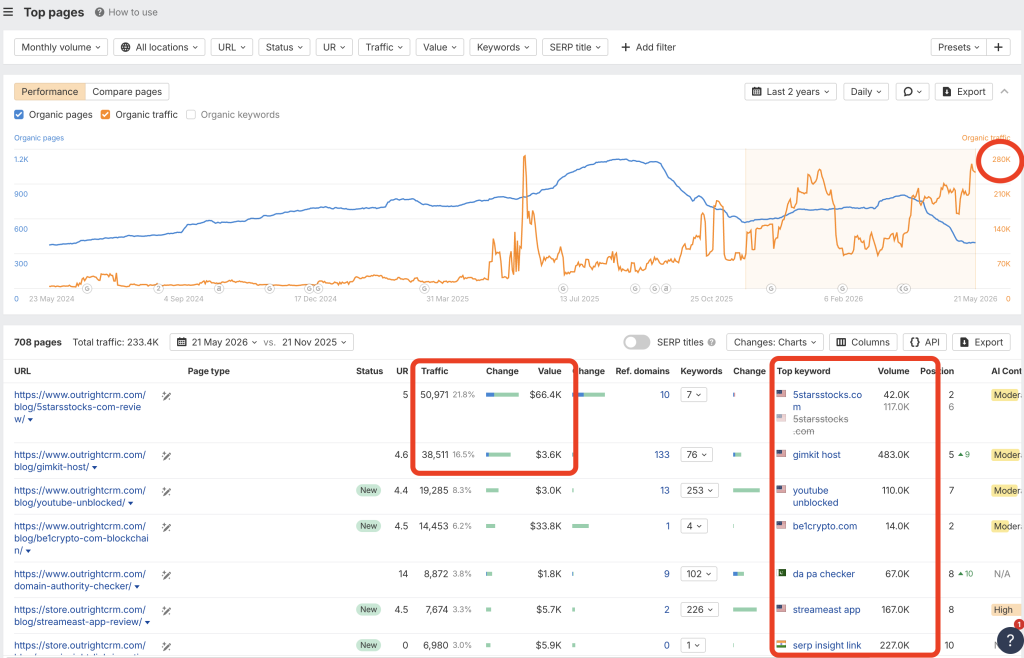
As shown in the screenshots above, despite the relatively strong DR and reported traffic, the website appears to rank primarily for low-value branded and navigational keyword variations rather than meaningful topical search queries. Most of the top-ranking keywords are simply variations of the domain name, “about us” pages, or weak partner-related searches, which suggests an artificially inflated or low-quality keyword footprint. This is usually a weak signal from an outreach perspective, as the site shows limited real topical authority and poor semantic depth.
Conclusion: High DR alone is one of the weakest outreach qualification signals.
The First Filter: Website Type Classification
One of the biggest operational improvements in outreach comes from filtering by site type before human review even starts. Of course, after the entire list is processed through the standard blacklist to filter out the worst junk and previously known websites that are clearly unsuitable for outreach.
Raw exports are extremely noisy.
If you scrape SERPs, competitor backlinks, media databases, or keyword-based prospect lists, a large percentage of domains are not even viable outreach targets.
You will inevitably collect:
- SaaS company sites,
- ecommerce stores,
- corporate websites,
- directories,
- marketplaces,
- local service businesses,
- coupon sites,
- aggregators,
- forums,
- and inactive projects.
None of those belong in a standard editorial outreach workflow.
This is why classification matters early.
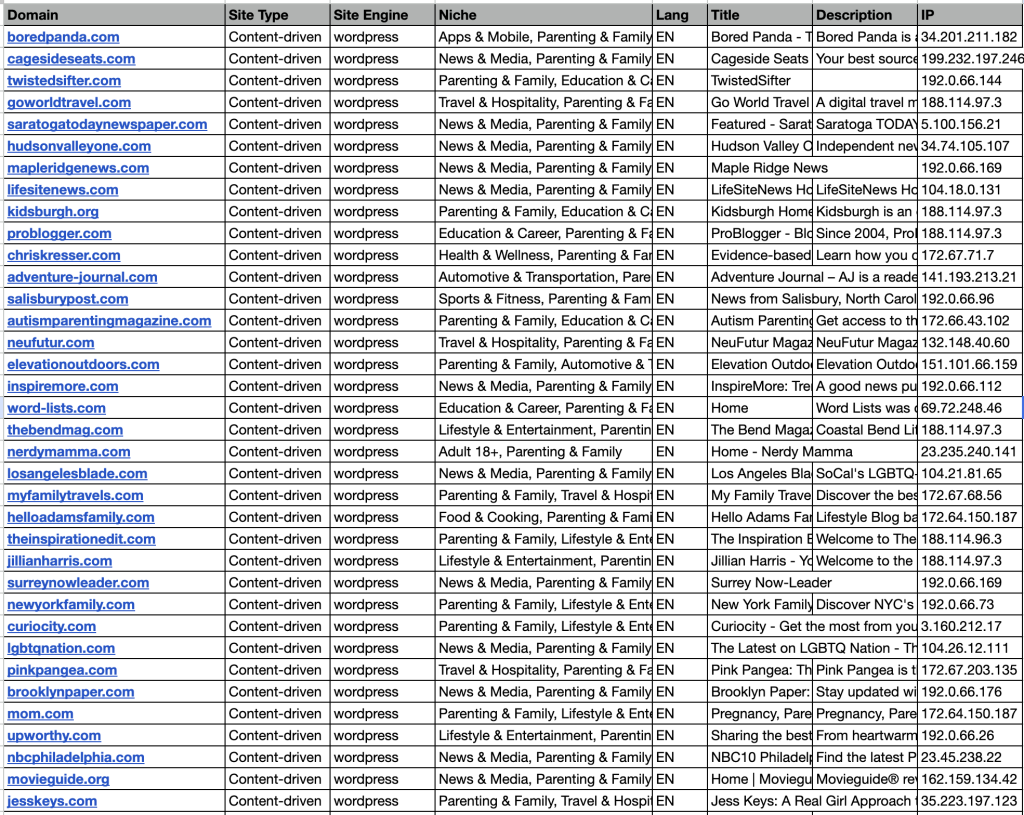
When we get a large list from Ahrefs, we first apply the standard Ahrefs filters by setting minimum and maximum DR and traffic thresholds, and then we classify the websites by type and niche (automatically using our internal tool, which you can test here.) Website type and niche classification significantly improve the filtering process. At this stage, we can already answer key qualification questions with much higher confidence:
- is this content-driven?
- does it publish editorial articles?
- does it behave like a publication?
- What niche does the website belong to?
This alone removes massive amounts of outreach waste.
A surprisingly large percentage of “prospects” are structurally incapable of supporting good editorial placements.
Content-driven websites are operationally different from company websites.
That sounds obvious, but many outreach teams still mix them together in prospect databases.
So, as a result of these two operations, we first export large website lists from Ahrefs using baseline filters such as DR, traffic levels, and other available Ahrefs metrics. After that, using SiteType, we classify websites by type and niche, while also applying our accumulated blacklists beforehand to eliminate obvious junk and unsuitable outreach targets. The result is a much cleaner and more qualified outreach prospect list.
Topical Relevance Is Usually Misunderstood
Topical relevance is not simply “same industry.” That interpretation is too shallow. A cybersecurity SaaS company can often secure stronger placements from:
- B2B operations publications,
- remote work platforms,
- startup media,
- productivity blogs,
- infrastructure engineering sites,
than from random “technology blogs” selling guest posts at scale.
Real relevance is contextual.
The question is not: “Does this domain belong to the same niche?” The real question is: “Would this publication naturally reference this company, page, or topic in an editorial context?” That changes how you evaluate prospects completely. Many outreach teams over-prioritize narrow niche matching and ignore audience overlap. Audience overlap is often the stronger signal.
E.g. A finance publication targeting startup founders may be more relevant for a SaaS accounting platform than a generic accounting blog covered in crypto guest posts.
So, If we talk about topical relevance, the goal is not just to find websites from the same niche as the client. The first thing we usually look at is what kind of topics and keywords the website actually ranks for. Not just whether the keywords are “related,” but whether they make sense for the client’s audience, product, and overall context.
The content itself also matters a lot. A website may technically belong to the same industry, but if the articles are low quality, overly broad, filled with sponsored posts, or written for a completely different audience, the placement will still feel unnatural. In practice, we are looking for contextual overlap where the client could realistically be mentioned inside the website’s existing content ecosystem.
Organic Traffic Quality Matters More Than Traffic Size
Traffic volume without context is dangerous.
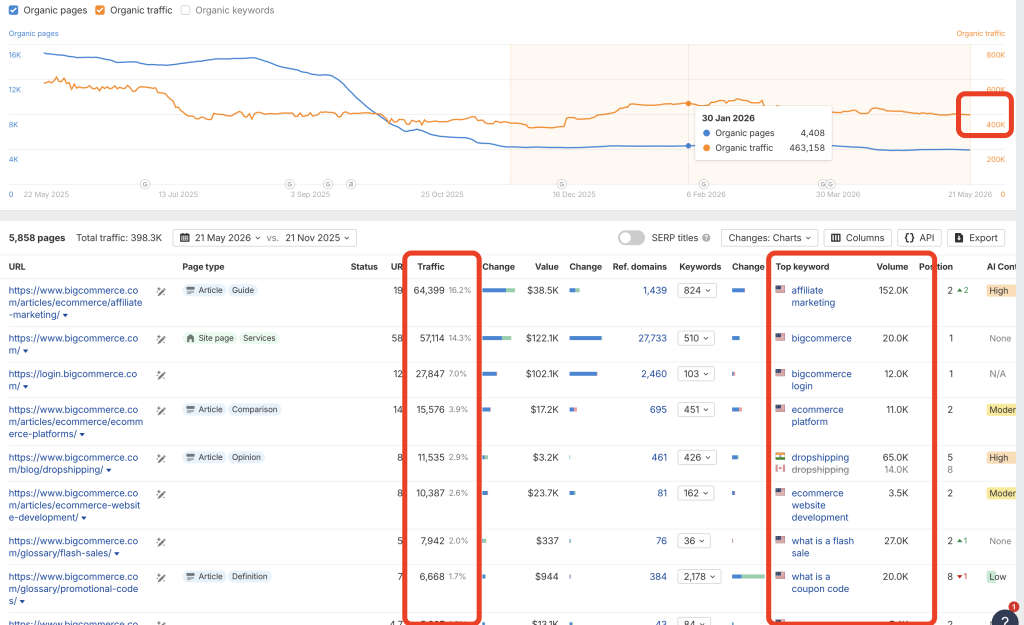
This is a very important step in qualifying outreach websites properly. A common mistake is relying too heavily on estimated traffic numbers from Ahrefs or SEMrush, treating them as the main quality signal. In reality, those traffic estimates are often inflated because the website ranks for weak, low-value, or artificially generated keyword variations with overstated search demand.
As a result, the perceived organic visibility of the website may look much stronger than it actually is. That is why we always analyze the actual keyword profile, topical consistency, and ranking quality behind the traffic numbers rather than relying on surface-level metrics alone.
One of the most common mistakes in outreach qualification is treating all organic traffic as equal.
It is not.
We look at:
- traffic trend,
- branded vs non-branded patterns,
- keyword intent,
- traffic geography,
- topical consistency,
- and page-level traffic concentration
A domain with 200,000 estimated visits driven by random trending keywords is often weaker than a focused publication with 15,000 highly relevant visits.
Many inflated traffic sites rely on:
- temporary trend spikes,
- parasite SEO,
- AI-generated informational pages,
- or broad irrelevant keyword coverage.
Those sites often collapse later.
Traffic consistency is usually more important than temporary growth velocity.
Geography Mismatch Is One of the Most Ignored Problems in Outreach
This issue quietly destroys campaign quality. A site can look strong in Ahrefs while being completely irrelevant geographically.
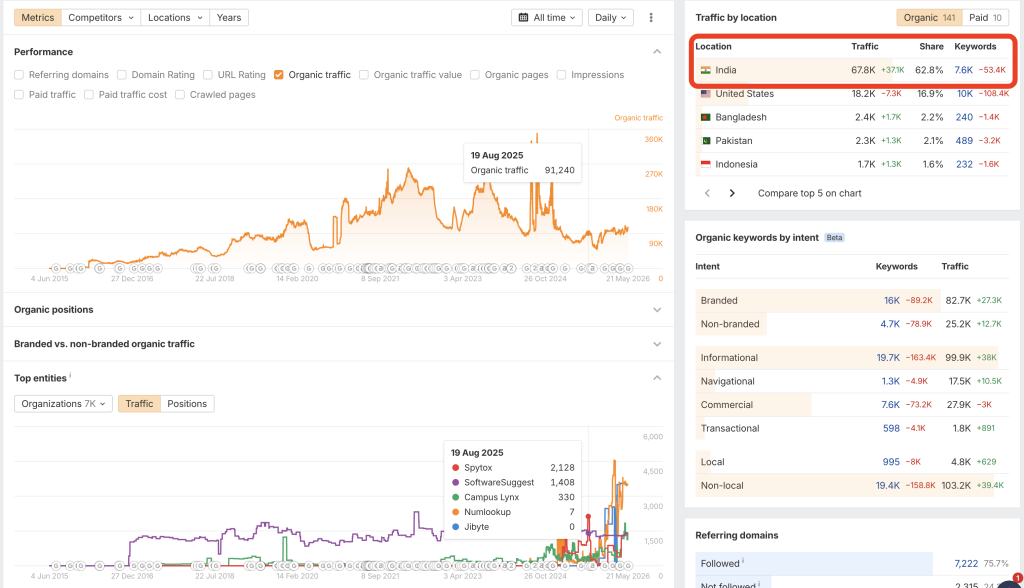
Example:
A US-focused B2B SaaS brand acquires links from domains where:
- 60%+ of traffic comes from India,
- rankings are mostly unrelated informational queries,
- and readership has no overlap with the target customer profile.
The placement may technically “count” as a backlink but operationally, it contributes very little. Traffic geography should align with business geography whenever possible. Not perfectly, but meaningfully. Many outreach reports look impressive until you inspect audience alignment.
Why We Reject High DR Sites Constantly
One of the most misunderstood parts of evaluating websites for placements is why experienced operators reject domains with strong metrics.
Here is a typical example.
A DR60+ “media site”:
- publishes 20+ articles per day,
- covers every imaginable niche,
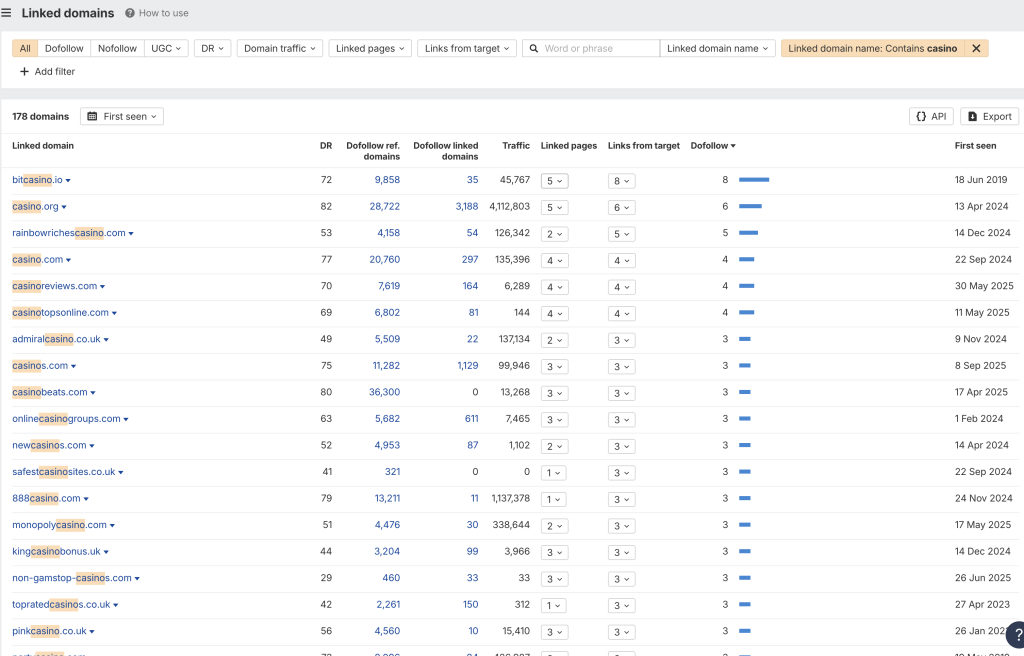
- links simultaneously to casinos, crypto, CBD, payday loans, and SaaS companies,
- accepts obviously templated guest posts, publishing them at scale in a separate category, often hidden from indexing or placed under URLs like
/sponsored/[article title], - shows declining traffic trend or sharp traffic volatility,
- and has authors who do not appear to exist anywhere outside the website itself.
On paper, the site looks strong. Operationally, it behaves like a monetized publishing network. These domains often survive longer than people expect because authority metrics lag behind actual quality deterioration. Many fake “media sites” look healthy until you start analyzing their outbound links, traffic patterns, content quality, and publishing structure.
Outbound link patterns usually tell you far more about a publication than DR ever will.
The Opposite Scenario: Why Lower DR Sites Sometimes Win
We regularly approve domains with lower authority metrics when they show:
- strong topical consistency,
- real editorial standards,
- stable organic growth,
- clean outbound linking behavior,
- authentic audience alignment,
- and evidence of actual readership.
A DR26 industry publication with real contributors and focused expertise can outperform a DR70 generic media farm over time.
Authority without editorial trust eventually becomes unstable.
Anchor Spam Patterns Reveal a Lot
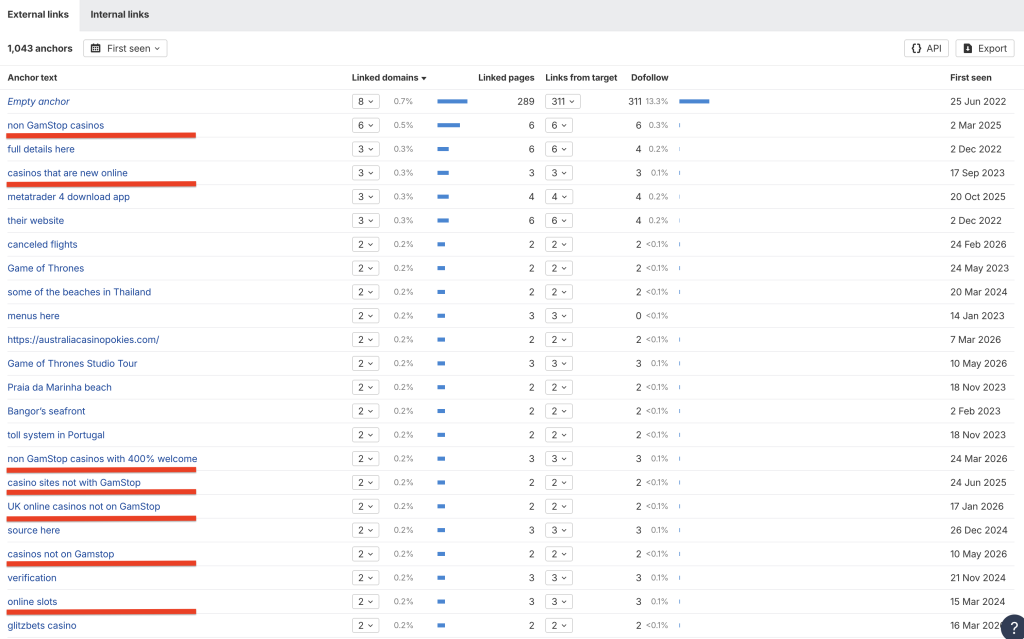
Anchor distribution is one of the fastest ways to detect manipulation. Talking about outgoing anchors…
We look for:
- excessive exact-match commercial anchors,
- repetitive money keyword patterns,
- irrelevant niche crossover,
- unnatural guest post footprints,
- and sudden shifts in linking behavior.
If a publication constantly links out using aggressive commercial/exact match/related to gambling anchors across unrelated industries, that is usually a bad sign. Editorial websites naturally produce mixed anchor profiles.
Manipulated sites often look mechanically optimized.
The difference becomes obvious after reviewing enough domains.
Content Quality Is About Editorial Behavior, Not Grammar
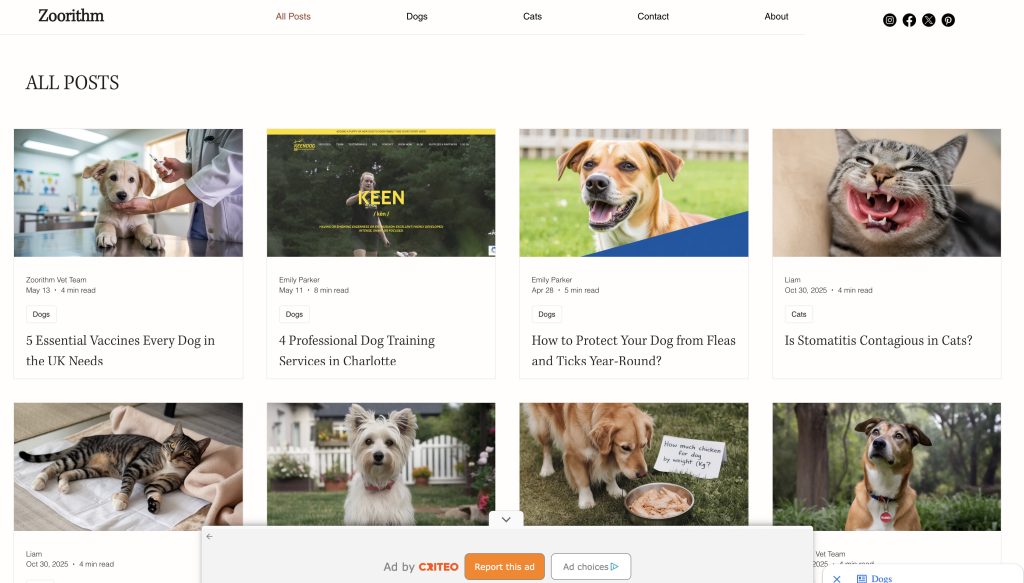
Many AI-generated sites now look visually convincing.
- The design is clean.
- The formatting is decent.
- The articles are long.
- The grammar is acceptable.
But operationally, the publication still feels hollow.
Common patterns include:
- generic topic selection,
- AI-gen images,
- no evidence of expertise,
- high publishing velocity
and content clearly produced for indexing rather than readership.
The problem is not AI itself. The real issue is the mass production of low-value content with little substance or overly generic information that does not actually solve the reader’s problem. In many cases, this content is created primarily for search engines (and AI engines) rather than for real people.
Indexation Patterns Matter More Than People Think
A surprising number of outreach targets have indexing problems that almost nobody checks before buying placements.
We typically verify this using a combination of Google Search operators and Ahrefs data.
One of the first things we inspect is how much of the website actually appears in Google’s index. A simple search operator like:
site:domain.com
often reveals whether Google is indexing the publication consistently or only partially. In many cases, websites may publish thousands of articles while only a relatively small portion of them actually appear in search results.
We also review indexing freshness.
For example, we manually check whether recently published articles are entering Google within a reasonable timeframe by using searches such as:
site:domain.com
combined with Google’s “Past week” or “Past month” filters. (Tools tab)
If a publication continuously publishes new content but recent articles rarely appear in search, that is usually a sign that Google’s trust in the site is weakening.
Ahrefs helps us validate this further.
We review:
- whether new URLs are receiving keywords,
- whether fresh pages gain visibility,
- whether organic pages are steadily growing or quietly disappearing over time.
Another important signal is sudden deindexation behavior.
Sometimes a website may still show decent overall traffic while large groups of pages quietly disappear from Google’s index. This can often be seen through sharp drops in indexed pages, unstable organic page counts, or irregular visibility patterns in Ahrefs.
We also pay attention to whether Google recrawls and updates pages normally. If titles, snippets, or recently updated articles fail to refresh in search results for long periods of time, it can indicate crawling or trust-related problems.
The key issue is simple:
some domains technically exist in Google while large portions of their content fail to index consistently.
That is a major red flag for outreach.
If Google does not reliably trust a publication’s new content, the long-term value of placements on that website becomes highly questionable.
Outbound Link Behavior Is One of the Strongest Signals
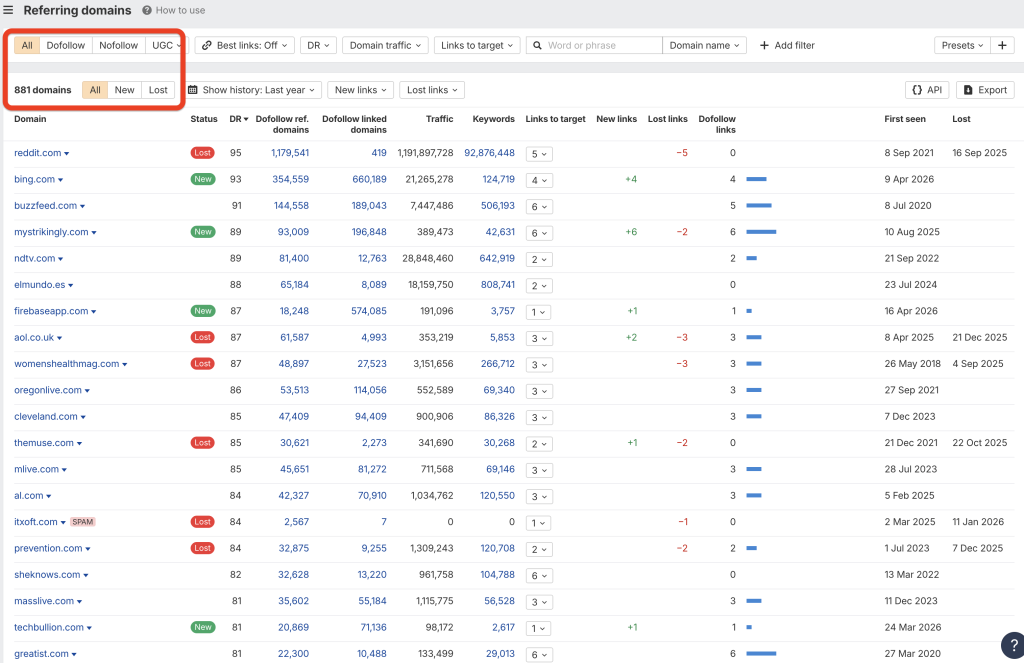
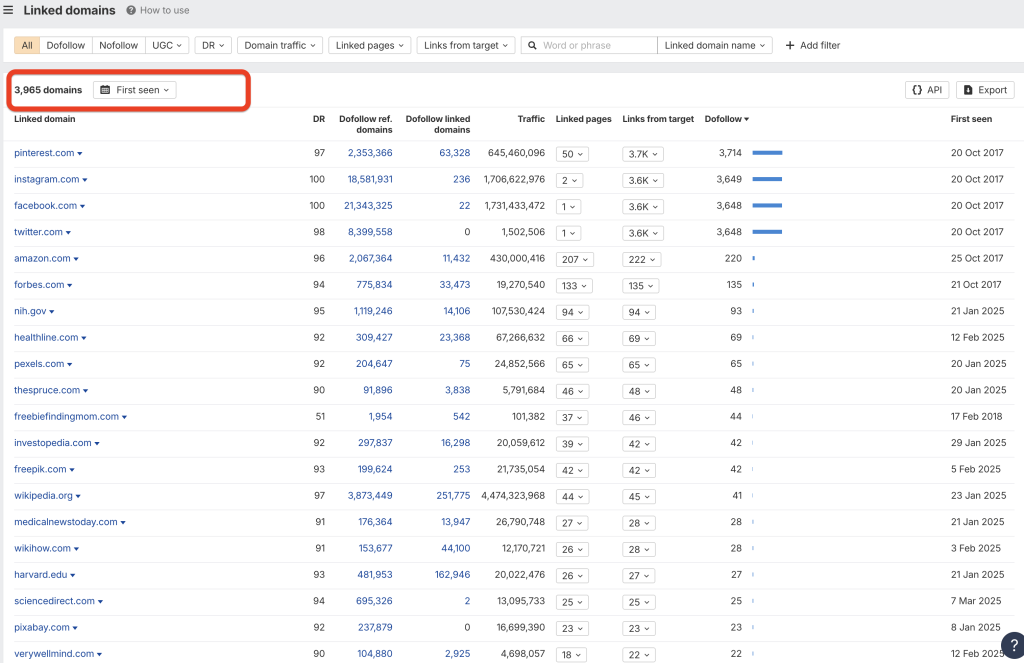
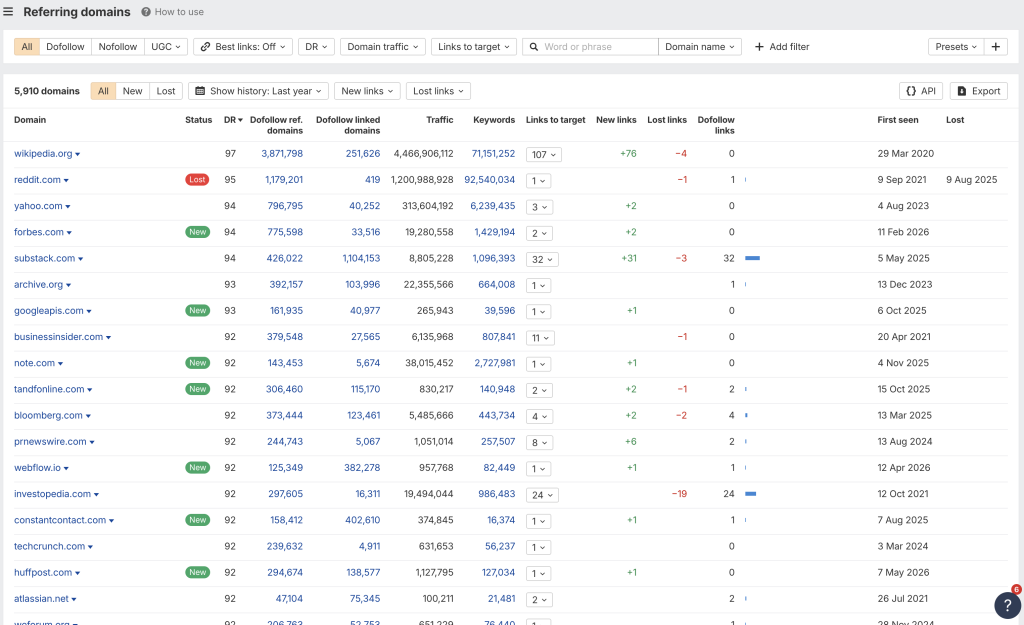
One of the first things we review is the relationship between linked domains and referring domains.
In most cases, natural editorial websites tend to attract links at a pace that is relatively proportional to how often they link out. When a website links to dramatically more domains than the number of domains linking back to it, it often indicates aggressive outbound link monetization.
For example, if a site has published links to thousands of external domains within a relatively short period of time, there is a strong chance that selling placements has become one of its primary business models rather than a secondary editorial activity.
A roughly balanced ratio between referring domains and linked domains can still look natural, especially for active publishers. But extreme imbalances are usually a warning sign.
We also review the types of websites appearing in outbound links. If the same publication frequently links to casinos, crypto projects, loans, gambling affiliates, CBD brands, VPNs, or unrelated commercial industries simultaneously, the editorial intent becomes questionable very quickly.
Anchor behavior is also useful, although we typically analyze this separately. Repetitive commercial anchors and exact-match keyword patterns across unrelated industries often reinforce the same conclusion.
None of these signals alone automatically make a site toxic. However, when multiple patterns appear together, they usually provide a fairly accurate picture of whether the publication behaves like a real editorial website or primarily as a monetized link asset.
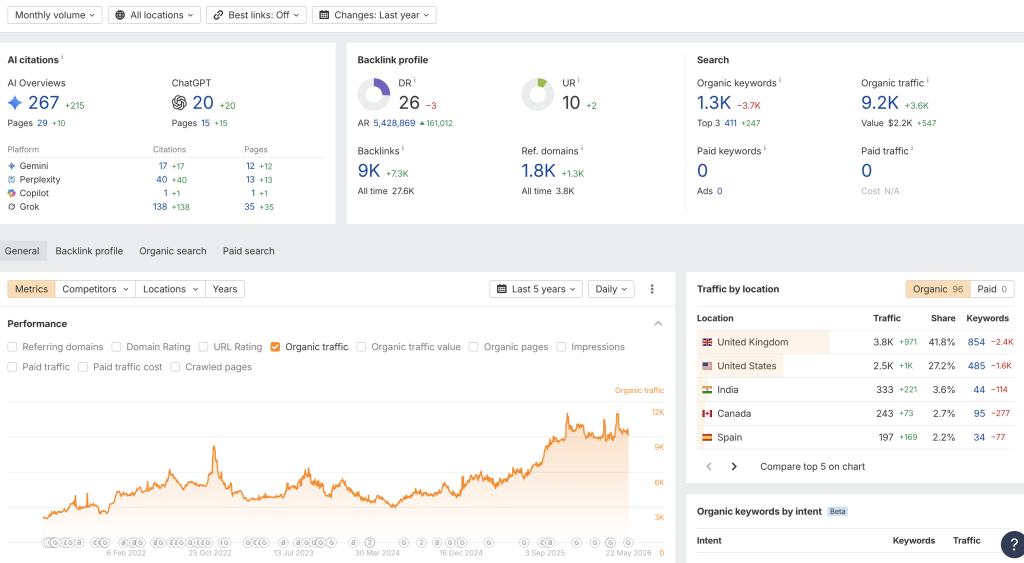
On the screenshots below, you can see that the referring domains and linked domains differ significantly.
In this example, the website appears to be selling more links than it naturally attracts, which is an important signal we take into consideration during the evaluation process.
Real Example: A Healthy Editorial Search Footprint
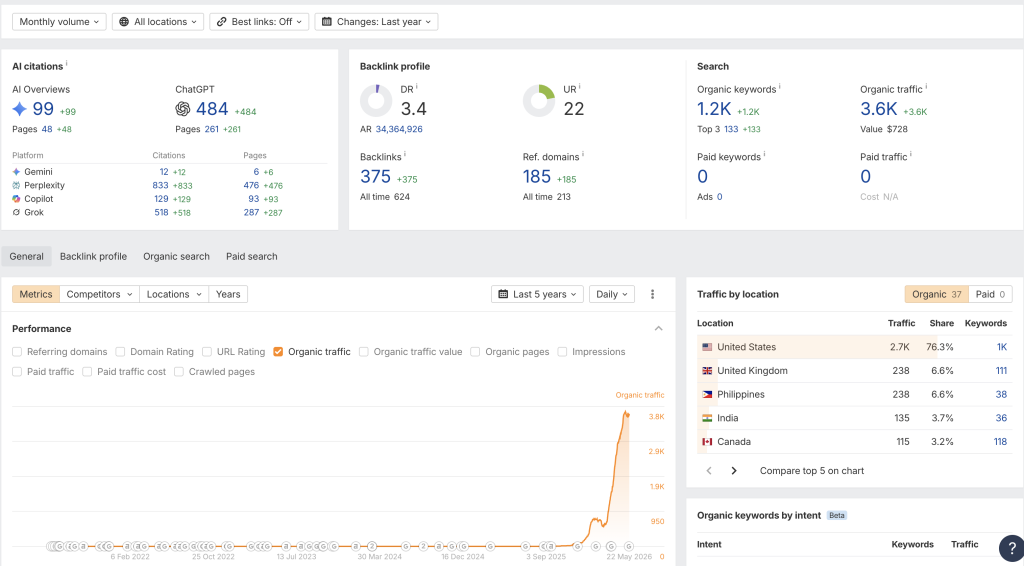
Here is an example of the type of publication we generally prefer during outreach qualification.
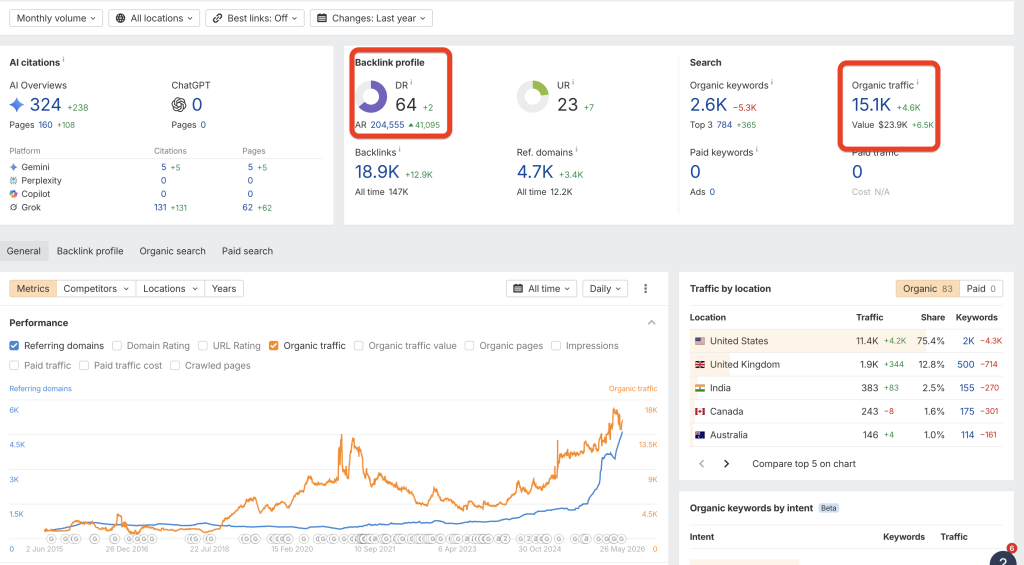
At the surface level, the website already shows many of the standard metrics people typically look at:
- strong DR
- growing or stable organic traffic
- healthy referring domain growth
- ratio of referring domains to linked domains at 1:1 or higher
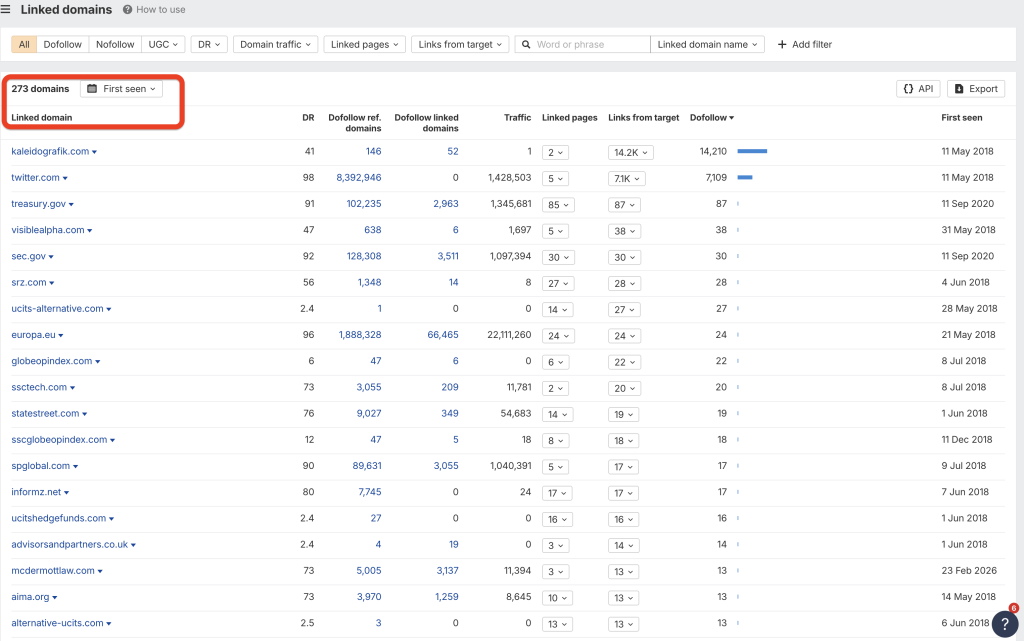
However, the more important part appears when reviewing the actual ranking footprint inside Ahrefs.
The website ranks consistently for:
- highly relevant industry queries
- commercially meaningful keywords
- informational topics directly connected to its niche
- audience-aligned search intent
- semantically related content clusters
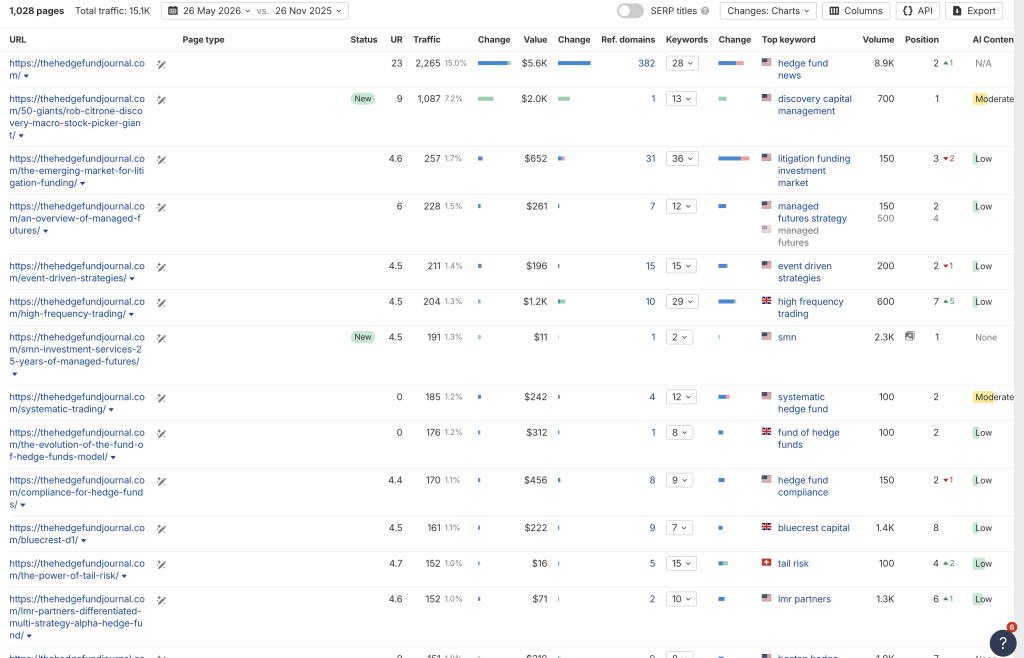
The traffic distribution also remains topically consistent across the site rather than being dominated by unrelated trending pages or random informational spikes.
This usually indicates that the publication has built real topical authority within its niche instead of relying on broad traffic harvesting strategies.
From an outreach perspective, this type of footprint is significantly more valuable because the audience, search visibility, and editorial positioning all align naturally with the placement context.
Additionally, the site shows strong citation visibility in AI Overviews, which is becoming an increasingly important authority signal.
Traffic by Location data also shows that nearly 90% of the traffic comes from the United States and United Kingdom, making the website significantly more valuable for campaigns targeting English-speaking Tier 1 markets.
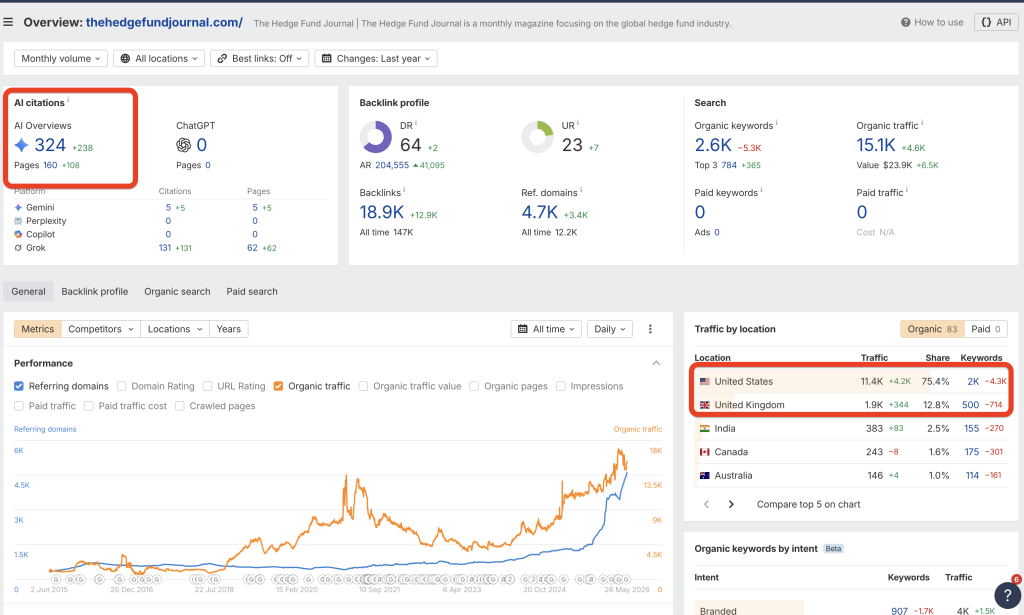
In practice, this is the kind of website structure we usually prioritize during prospect qualification.
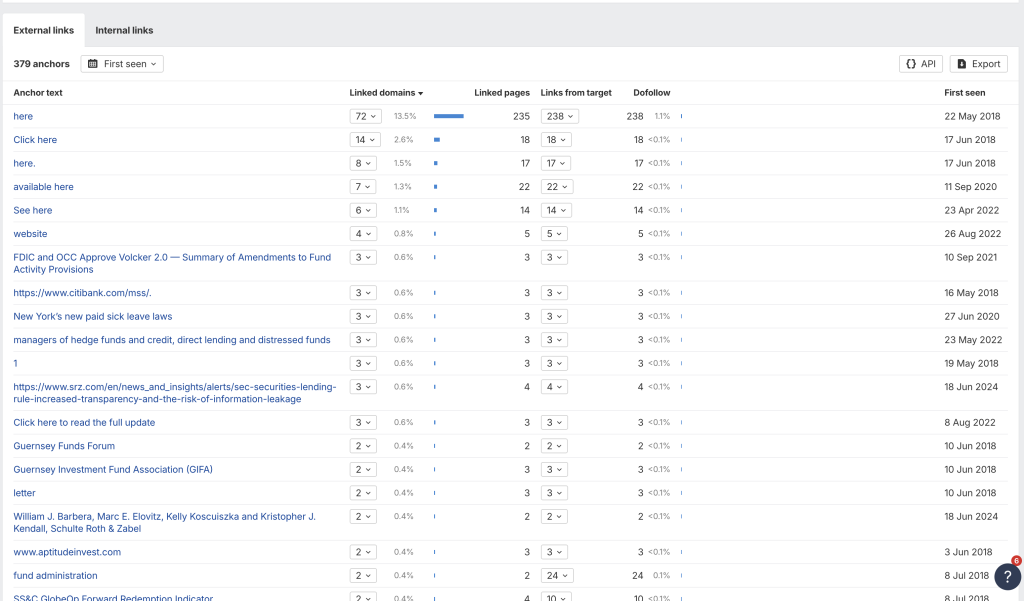
Additional review also showed that the referring anchor profile appears natural and well-balanced, without obvious spam patterns or manipulative anchor concentration.
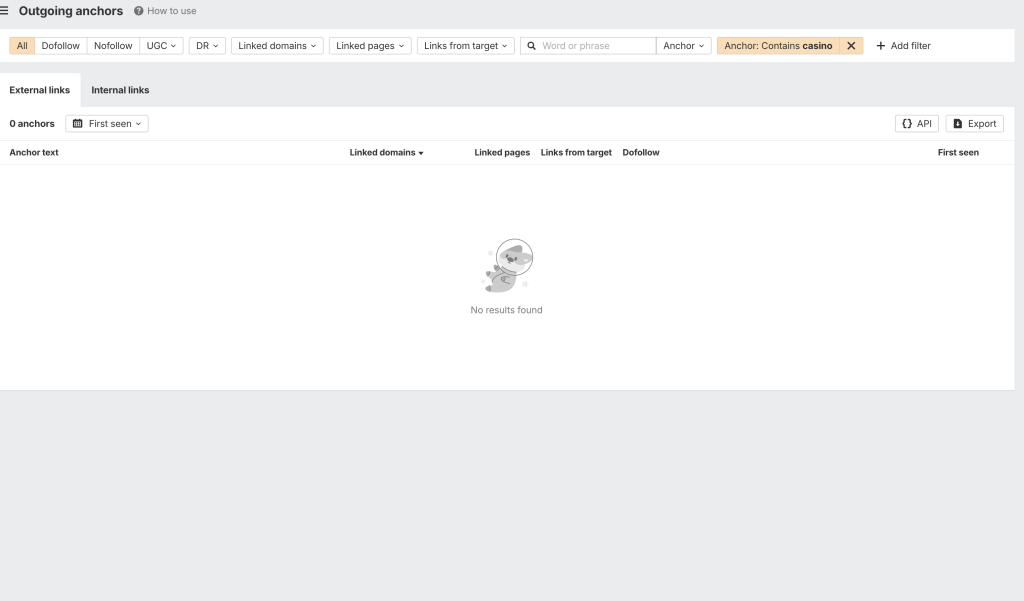
We also did not identify gambling-related outbound links, which is an important quality signal for long-term outreach value and overall domain trustworthiness.
Cleaning Lists Is an Operational Discipline
Prospect list cleaning is not a minor preparation step.
It is a core outreach function.
In large Ahrefs exports, 40–80% of domains are often unusable for editorial outreach before manual qualification even begins. The filtering process (automatically + manual review after) typically removes:
- ecommerce domains,
- local businesses,
- company websites,
- thin affiliate sites,
- inactive blogs,
- AI spam networks,
- duplicated ownership networks,
- and domains with irrelevant traffic profiles.
The result is usually much smaller than people expect. But significantly stronger.
Smaller qualified lists outperform massive low-quality databases almost every time.
Editorial Signals Still Matter
There are small signals experienced outreach teams notice immediately:
- author consistency,
- editorial tone stability,
- citation behavior,
- publication cadence,
- contributor quality,
- content depth,
- and whether the site appears to have an actual editorial process.
You cannot reduce all of this to a spreadsheet metric.
Some domains simply behave like real publications.
Others behave like monetized inventory.
Experienced operators learn to separate the two quickly.
The Biggest Mistake in Outreach
The biggest mistake is optimizing for link acquisition volume instead of placement quality.
That creates distorted incentives:
- outreach teams chase easy approvals,
- publishers optimize for monetization,
- relevance standards collapse,
- and campaigns slowly fill with low-trust placements.
The outcome looks good temporarily because metrics accumulate.
But over time, the backlink profile becomes noisy, unfocused, and increasingly artificial.
Editorial quality compounds. So does outreach debt.
Key takeaways
- Qualify before you pitch: fixing your prospect list removes most wasted outreach in one step.
- Read the full signal set, since website type, relevance, traffic quality, geography, and link behavior together tell you far more than a DR number.
- Be willing to reject high DR sites and accept strong lower DR ones based on those real signals.
- Treat list cleaning as a repeatable operational habit, not a one-time task.
Final Operational Reality
Good outreach is not primarily about sending more emails.
It is about rejecting more bad prospects before outreach even begins.
That is the operational layer many people never see.
Strong outreach campaigns are usually built on:
- aggressive filtering,
- contextual relevance,
- editorial judgment,
- audience alignment,
- and disciplined qualification standards.
The best outreach teams spend far more time evaluating domains than contacting them.
Because once low-quality prospects enter the pipeline, the entire campaign becomes harder to control.
And at scale, prospect quality determines almost everything that happens next. If you would rather have this evaluation handled for you, it is built into our outreach link building service.
Once you know which sites are worth pursuing, the next questions are usually budget and results: see how much link building costs and learn how to measure the ROI of your link building campaigns.
Frequently asked questions
A high domain rating can hide problems like irrelevant traffic, anchor spam, poor indexation, or excessive paid outbound links. When those signals look wrong, a high DR site is often a worse bet than a smaller, cleaner one.
By reading a full set of signals rather than one score: website type, topical relevance, organic traffic quality, geography, anchor and indexation patterns, and outbound link behavior. Those together show whether a site is a real editorial property worth pitching.
Yes. A lower DR site with genuine topical relevance, healthy organic traffic, and clean editorial behavior can pass more value and carry less risk than a bigger site with weak signals.
Treating outreach as an email problem instead of a filtering problem. Most wasted effort comes from a poorly qualified prospect list, so cleaning the list first fixes more than rewriting pitches.
This is the exact qualification process behind our niche edits and link insertions: every domain you approve has already passed it.